Thaali
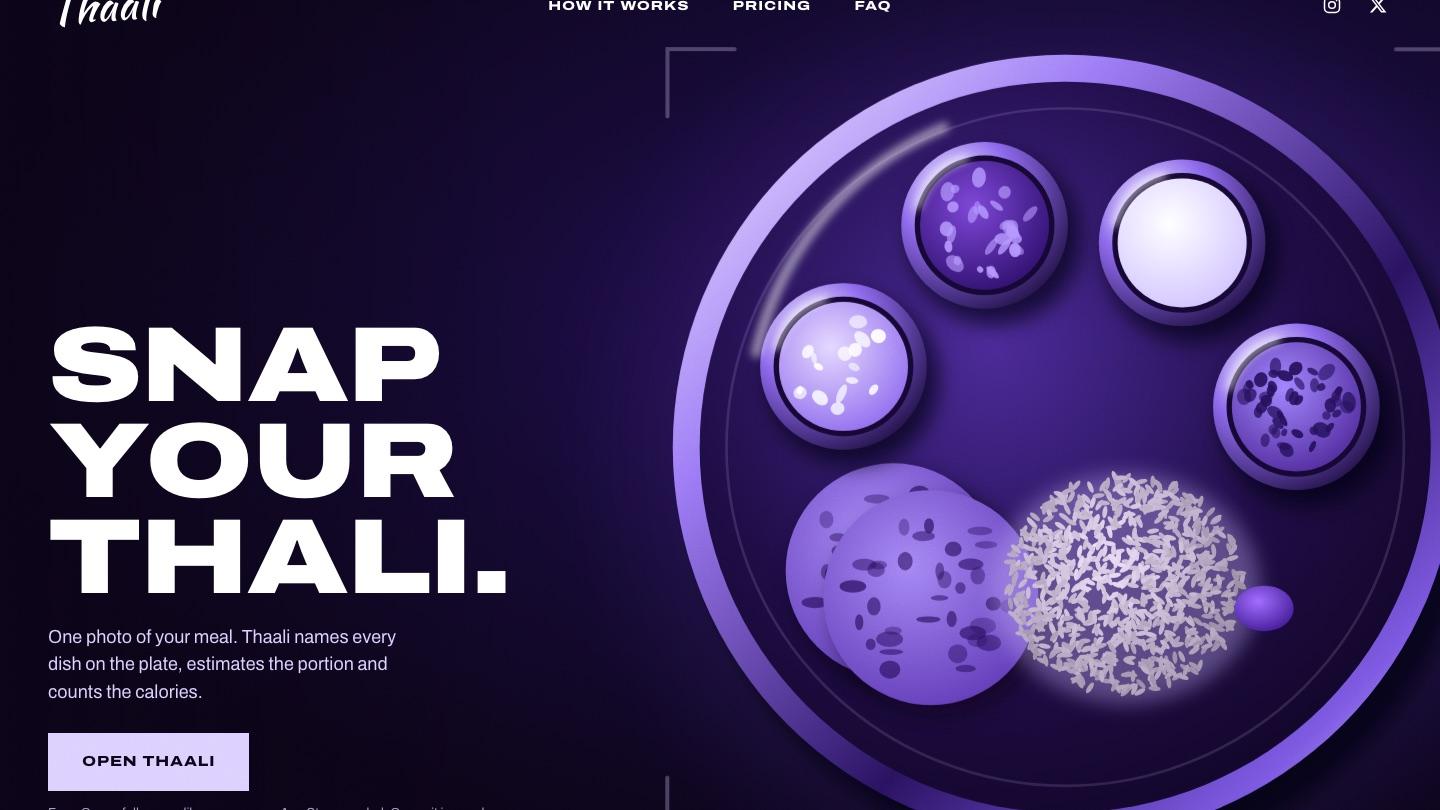
Photograph a thali, get every dish on the plate with its portion and calories, then correct anything the model got wrong.
- Status
- Launched. Live on the web as an installable PWA since Nov 2026. Not in the app stores
- My role
- Solo. Product, design, code and launch.
- When
- Nov 2026
- Capabilities
- LLM apps, Mobile, Web, Integrations
The problem
Most calorie trackers are built around packaged food and single items. An Indian meal is several dishes on one plate, in portions nobody weighs. Typing each one in is the reason people stop tracking.
What I built
An Expo app that ships to the web as a PWA and can be added to an iPhone home screen.
- Meal scanning: the photo is resized on the device, sent to an edge function, and a vision model returns the dishes and portions.
- An onboarding flow that sets a calorie goal from the user's details.
- Offline-first logging. Meals are stored in SQLite on the device and the app works without a connection.
- Subscriptions through Razorpay on the web, with scan limits enforced on the server.
- A food database of Indian dishes that I extended with regional entries and packaged products.
Decisions
The model only identifies foods and estimates portions. Calories and macros always come from the app's own food database, so a model cannot invent a nutrition number.
The nutrition logic is plain TypeScript with no React or Expo imports, and the same code runs in the app and in the server functions.
I chose Expo over a native iOS app to reach the web and iPhone from one codebase quickly. The cost is that store releases and device testing are still ahead.