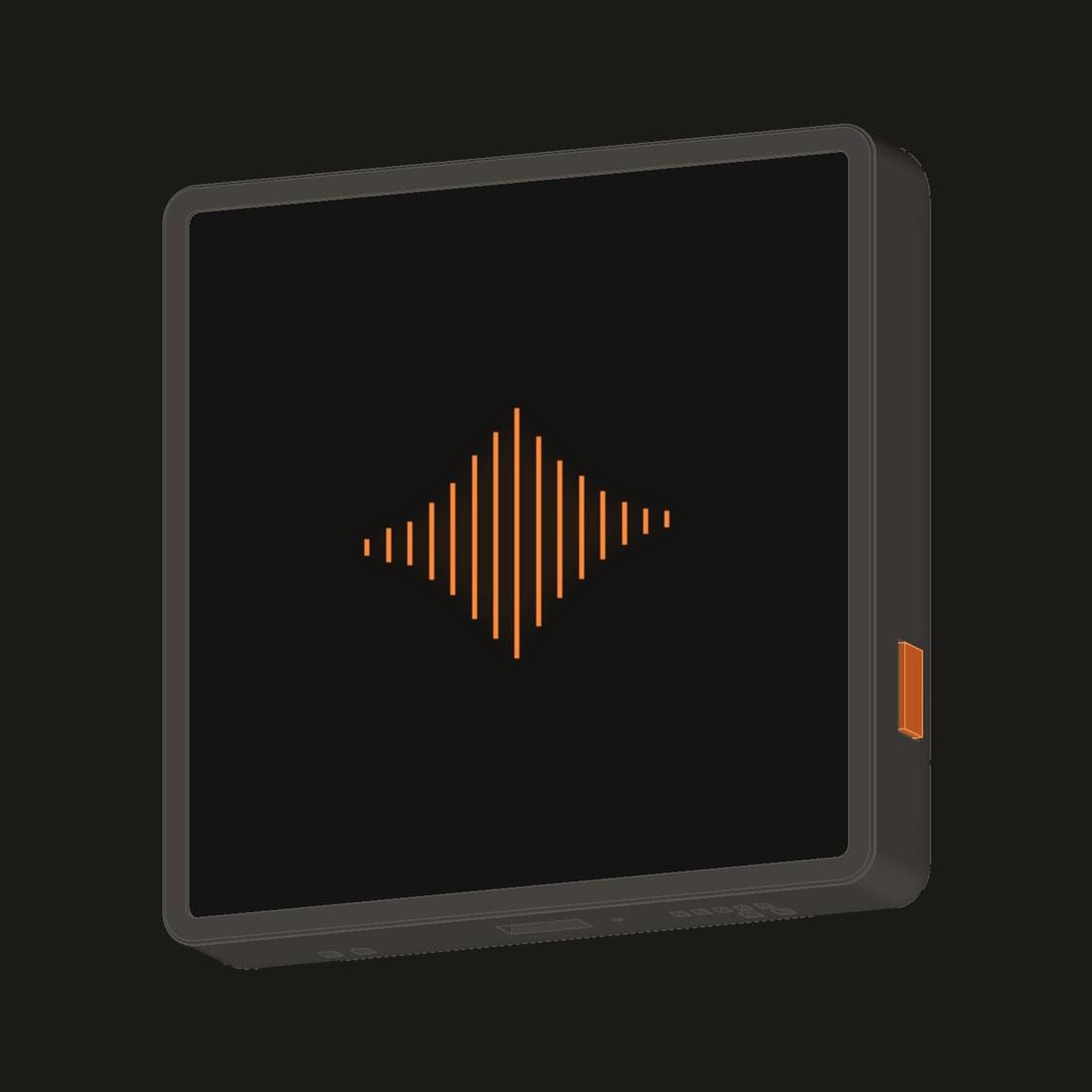
B55
A software prototype of a small device you talk to. It runs a local model, uses tools, and asks before it changes anything.
- Status
- Prototype. Runs as a simulator on a Mac. No hardware has been built
- My role
- Solo. Architecture, daemon, interface and test harness.
- When
- Nov 2026
- Capabilities
- LLM apps, Agents, Memory, Voice, Desktop, Integrations
What it is
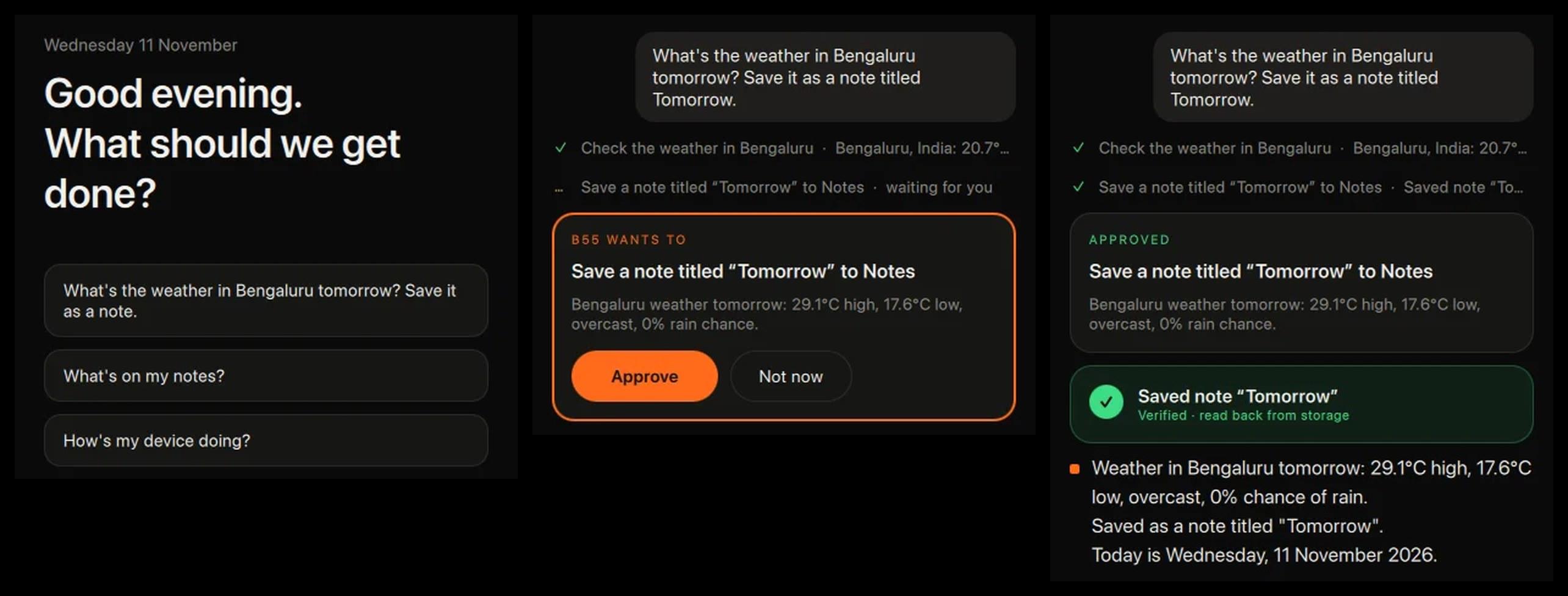
B55 explores what a personal device looks like when the main interface is a request rather than an app grid. You type or speak; an agent decides which tools to use; the screen shows what it wants to do and waits.
It is a simulator. The interface and the agent are real and run on a Mac, with a path to a Raspberry Pi drafted but not built.
What I built
Two processes that talk over a local Unix socket using newline-delimited JSON.
- The daemon: an asyncio agent loop, a tool registry, a policy gate, connectors, voice input and a SQLite memory.
- The shell: a Qt QML interface with its own on-screen keyboard, onboarding, and the approval and result cards.
- Connectors: GitHub works end to end. Gmail is implemented and tested offline but the consent flow is not finished. Drive has its scope declared and nothing more.
- A rehearsal runner that replays a demo request against the local model.
Decisions
Policy lives in code, not in the prompt. Any tool that is not read-only requires approval, and no answer within two minutes counts as no. After a write, the daemon reads the value back, and the interface shows Verified only if that check passed.
I wrote a small agent loop instead of adopting a framework. It is about a hundred lines, which makes it possible to reason about exactly when a tool can run.
The interface never holds secrets and never calls a model. Only the daemon does, through one adapter that can point at Ollama, llama.cpp or a hosted model.
Qt QML was chosen over a web view because it renders straight to the display with little memory, which matters on a small board.
What the testing showed
The first working slice shipped with five daemon tests; the suite later grew to 141. A scripted rehearsal of the core demo request passed 20 times out of 20 on the local Qwen3 model.
That rehearsal is a harness that answers the approval prompts itself, on a simulator. It shows the loop is repeatable. It is not user testing and says nothing about hardware.
How it fits together
Built with
Screens